PHOTOGRAPHY - PAINTING WITH LIGHT


Showing posts with label 305m1. Show all posts

Friday, 21 January 2011

London Art Fair 2011

We went down to the Art Fair held at The Business Design Centre in Islington yesterday.

It is a showcase for contemporary art work, including photography, with 124 galleries showing curated and solo shows.

There is a section for emerging artists in the 'art projects' as well as Photo 50, a showcase for contemporary photography.


Photo50 at London Art Fair

Photo50 is our showcase for contemporary photography.  Now in its fifth year it will feature 50 works by artists selected by a distinguished panel with both established artists and less well known figures.  This year’s panel includes Zelda Cheatle, Curator and Director of the Tosca Fund Photography Collection, Celia Davies, Head of Projects for Photoworks, Sebastien Montabonel, European Senior Specialist of Photographs at Phillips de Pury and Joanna Pitman of The Times. We asked each member of the panel to nominate up to three artists and then introduce their work.

A Photography Focus Day on Wednesday 19 January 2011 will feature a series of discussions and tours dedicated to contemporary photography.

  
Scarlet Hooft Graafland / Polar Bear / 2007 / C-print/ 100 x 125cm / Courtesy of the artist / Photo50 2011

Scarlett Hooft Graafland / Polar Bear / 2007 / C-print/ 100 x 125cm / Scarlett Hooft Graafland courtesy Michael Hoppen Contemporary


David Spero/ Studio 3/ Image courtesy of the artist

David Spero/ Studio 3/ Image courtesy of the artist


Bill Armstrong/ Renaissance 1005/ 2006-7/C-print mounted to aluminium Framed/ 76.2 x 91.4cm/ Edition of 5/ Image courtesy of the artist
Bill Armstrong/ Renaissance 1005/ 2006-7/C-print mounted to aluminium Framed/ 76.2 x 91.4cm/ Edition of 5/ Image courtesy of Hacklebury Fine Art
 

I couldn't resist taking this shot of the roof structure of the exhibition hall.


The works on display covered all artistic genres and no doubt we only saw a small proportion of those on display, it was fascinating and very inspirational.


Off the wall, you could say, I remember the flying ducks my mother used to have on her wall, an example of image manipulation.


This is photograph of New York which has been manipulated to reflect itself.


Here the artist has made a composite from iconic images from around the world. 
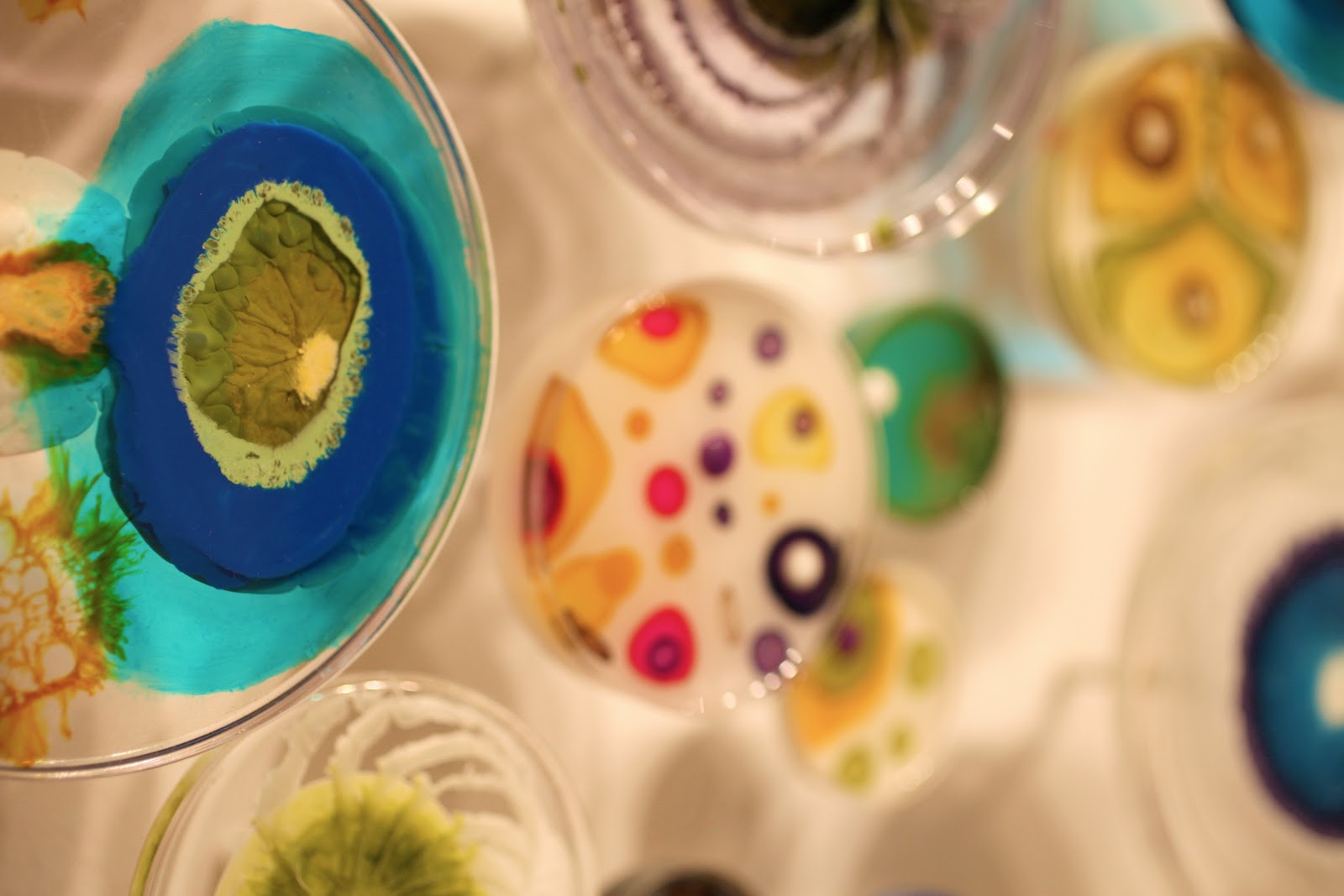

This is a beautiful wall panel made up of coloured blown glass, reminded me a little of the marbles I used to play with as a child, or the glass made by Murano glass works in Italy.


Some of the viewers were as interesting as the art works.

Since I am in the process of deciding how best to present my images, it was interesting to see the different treatments used at the show.

On the whole however, I found that most of the contemporary photography was presented  mounted behind a sheet of acrylic, this made some difficult to view since lighting reflected off the surface.

Wednesday, 19 January 2011

ARCHITECTURAL DECORATION (NAPLES ARCHEOLOGICAL MUSEUM)


Whilst in Italy visiting the National  Archaeological Museum of Naples, I was inspired to photograph many of the exhibits.  These help record the daily lives of the inhabitants of the surrounding area right back to Roman times.  Many of the exhibits were taken from Herculanium and Pompei, Roman cities of great sophistication, and show how people lived, how they decorated their homes and the items they used and treasured.

Since one theme of my assignment covers architecture, I thought I would include these since architectural decoration and detail is covered by this.  In addition I feel that architecture influences the way people live and inhabit a space, therefore this translates into the items they use in daily life and treasure for decoration.


This is a detail from a sarcophagus carved in the 4th centure AD, of Roman origin and shows very find detail.


This detail is taken from the so called 'blue vase'.  It is a wine amphora depicting a Dionysiac themed grape harvest, made by adding a layer of white paste to a blue glass background.  Locally made in the Augustan period, 1st Century AD.

This must be where Wedgewood got his inspiration for his Jasperware, paste cameos on blue unglazed pottery.

This shot was difficult to get since the vase was in a square glass case with four tungsten lights inside attached to the top, shining directly down onto the vase.  Great illumination for viewing but not for photographs.


This is a wall painting taken from a villa in Pompei of Terentius Neo (a baker) and his wife. It was found on the rear wall so that anyone entering the house had an immediate view of it from the atrium.

Below are further wall paintings taken from Pompei and Herculanium and show how wealthy Roman families decorated their homes.


These animal head spouts were taken from a fountain and must have looked very impressive when in use.

Since they were lined up on a plain wall I liked the idea of giving an impression of the spouts but concentrating focus on one, I therefore used a wide aperture on autofocus and then recomposed the shot.


This is a silver drinking vessel decorated with olives and branches from the House of Menander where a silver hoard was found.  There were 118 pieces packed in wooden cases in the basement of the house and were placed there during restoration of the villa, after damage during the earthquake of AD62.  They had been wrapped in cloth and wool for protection.


The figures of athletes below were most impressive since they were in running position and not the usual erect pose draped in robes and holding spears, shields etc.

They were recovered from the Villa of the Papyri, with another 65 works in bronze and 28 in marble and more than 1000 rolls of papyrus.  They decorated the gymnasium  at the centre of which was a swimming pool.

These were difficult to photograph since  I wanted to depict the running action but with the striking face in focus.  The large windows behind let in bright sunlight and there were constantly people milling about.  I got as close to the runner as I could and used a shallow depth of field to try and cut out some of the distractions.


The final shot is part of the museum building itself, the building was originally a palace, constructed in the Renaissance period and renovated and restructured by Ferdinand IV of Bourbon around 1780.


This is the Great Hall of the Sundial and was begun in 1612/1615 and was intended to house the 'Studi' and the public library, so called because of a sundial built into the floor, lit by a shaft of light which enters the room at midday, through a hole from the south-west corner of the room.

Monday, 13 December 2010

MASTERS OF PHOTOGRAPHY


Here is a video found on youtube showing images from famous photographers, many of the photographs are instantly recognisable and have influenced the way I take pictures today.

Many of the images are iconic since they depict events and surroundings which are familiar to us and therefore form an emotional response, a connection with our direct experiences.  They are instantly recognisable as moments taken from time, which illustrate how people interact with each other and their surroundings.

I feel that I need to incorporate this connectivity in my shots, particularly in my street photography, not just depicting a location, but some interaction between the subject and their situation, for example the couple looking into the parade.


I have also tried to concentrate on detail picked out of the larger scene, as in the girl in surplice below.  All these images are taken from a Saints day parade in Mijas, Spain.


The crowd was as interesting as the parade, here parent smile at their child whilst trying to block his ears to the noise of the parade.


The expression on the face of the woman on the balcony mirrors that on the face of the icon, perhaps I should have cropped it further to draw the viewers attention to this detail.


The look of concentration on the face of this bearer is the focal point of this shot.


I like the blurred image of hands and drumsticks in this shot, it helps to convey movement and action.


Sunday, 12 December 2010

Magiche immagini:Ernst Haas

I have embed a short video of the work of Ernst Haas, as you can see his work covered every genre of photography from macro to street and everything in between.  It is truely inspirational, I can't wait to go out and try to emulate his work.


Saturday, 11 December 2010

JOE CORNISH / LECTURE

The landscape photographer Joe Cornish came to the college to give a lecture which I was lucky enough to attend.

As well as viewing his images he gave a lengthy talk on his career and experiences, which was very inspirational.

After attending art college he became interested in photography and served a 10 year apprenticeship with a professional photographer, thoroughly learning his craft.  He drew a comparison with Ansel Adams, the American photographer, who worked as a warden in the Yosemite national park for many years, learning the landscape, before becoming famous for his images.


Another photographer who has greatly influenced Joe Cornish and from whom he takes inspiration is Ernst Haas.  Born March 2 1921 in Vienna, died September 12 1986 New York.  His photography encompasses all the genres and he was known for his innovations in colour photography, experiments in abstract light and form, and a member of Magnum Photos agency.

The following four images are from his portfolio and you can clearly see their influence on Joe's work, capturing the quality of light in reflections, and energy and movement in the flow of water and the rodeo scene.  The quality and saturated depth of colour is beautiful.


Joe Cornish is famous for his landscapes, but has also worked in architecture and is very interested in photographing detail.  He has worked quite extensively for the National Trust and spends long hours trecking in all seasons, to obtain iconic pictures of the landscape.


Once you have developed an infallible technique, knowing the camera, using a tripod, understanding exposure and that a period of time has potential, as in the softening effects  of shutter speed on the flow of water and showing the energy in that flow, then you can put yourself at the mercy of inspiration.

In the seascape above, a slower shutter speed has been used to soften the flow of water against the cliff face, with lichens on rocks in the foreground repeating the colour and pattern from the base of the cliff.


Here again the flow of the surf is soft and reflects soft fluffy clouds, a wavy surf line leads your eye into the distance and forms a connection with the sky.  He has used tones of blue reflected from the sky throughout the composition, with a hint of coastline adding a focal point and giving a sense of perspective.

Don't forget to use focus as a creative tool, in landscape most images are sharp all the way through, but aperture and focus should be used as a creative tool to add a sense of mood and depth.  Lenses can be used for compression or to expand space, you should study your scene and decide what you want to include, exposure can be managed with the use of filters.


Explore your surroundings, many photographers miss out on 20% of opportunities by not making use of detail as in macro and close up photography.


In tones of blue again, creating harmony in the shot, with the lines running diagonal to add energy and dynamism.


Another tip was to learn to see colour casts in light, the quality of light changes throughout the day being at its softest and warmest during and shortly after,  and before, dawn and dusk.  Here use has been made of the glowing light of early morning.


In this picture taken on a beach near Tenby in Wales, I have tried to use the device of reflected light in the water on the beach, with seaweed and ripples in the sand adding texture.  The evening light has given a pink glow to the whole scene.


Here the rising sun is reflected off a seaweed strewn rock, unfortunately I did not have a graduated filter to hold back the sunrise, the picture is therefore overexposed in the top right.


In this photograph taken in the Lake District I have made use of reflections in water to echo the sky, with muted tones of colour adding to the tranquil atmosphere.

I think one of the most important messages I have taken away from the lecture is to know your equipment thoroughly, after that know what the light is doing and what can be achieved and then look for inspiration and keep the composition simple and natural.


Although much of Joe Cornish's work is the panoramic landscape shot, the principles he has outlined in his lecture, for example composition (if it isn't interesting, leave it out), using the rule of thirds, perspective to give a sense of depth, different lenses for compression or expansion and creative use of depth of field, can all be applied to architecture and all other forms of photography.


In these and the following landscape and detail shots I have tried to use all of this advice to improve my photography.


Sunday, 5 December 2010

TILT-SHIFT PHOTOGRAPHY


I tried out a tilt-shift lens to see what effect this created, it was interesting to try and as you can see the shift has a noticeable affect, turning the lens left and right.


With the shift over to the left above and right, below.


I found it rather fiddly to use since the shift has to be turned and then manually focused.  Interesting operation though to see the lens actually moving from left to right.

The pictures below show the tilt in operation, the first taken as a straight 45mm shot,


then with the tilt up which throws the bottom of the picture out of focus,


finally with the tilt down which throws the top slightly out of focus, although it is difficult to see this clearly on blogger.


Although these lenses were developed to correct perspective in architectural photography, they have since been used to create some very interesting artistic effects, although they remain very expenses items of equipment, usually beyond the means of  the amateur photographer.